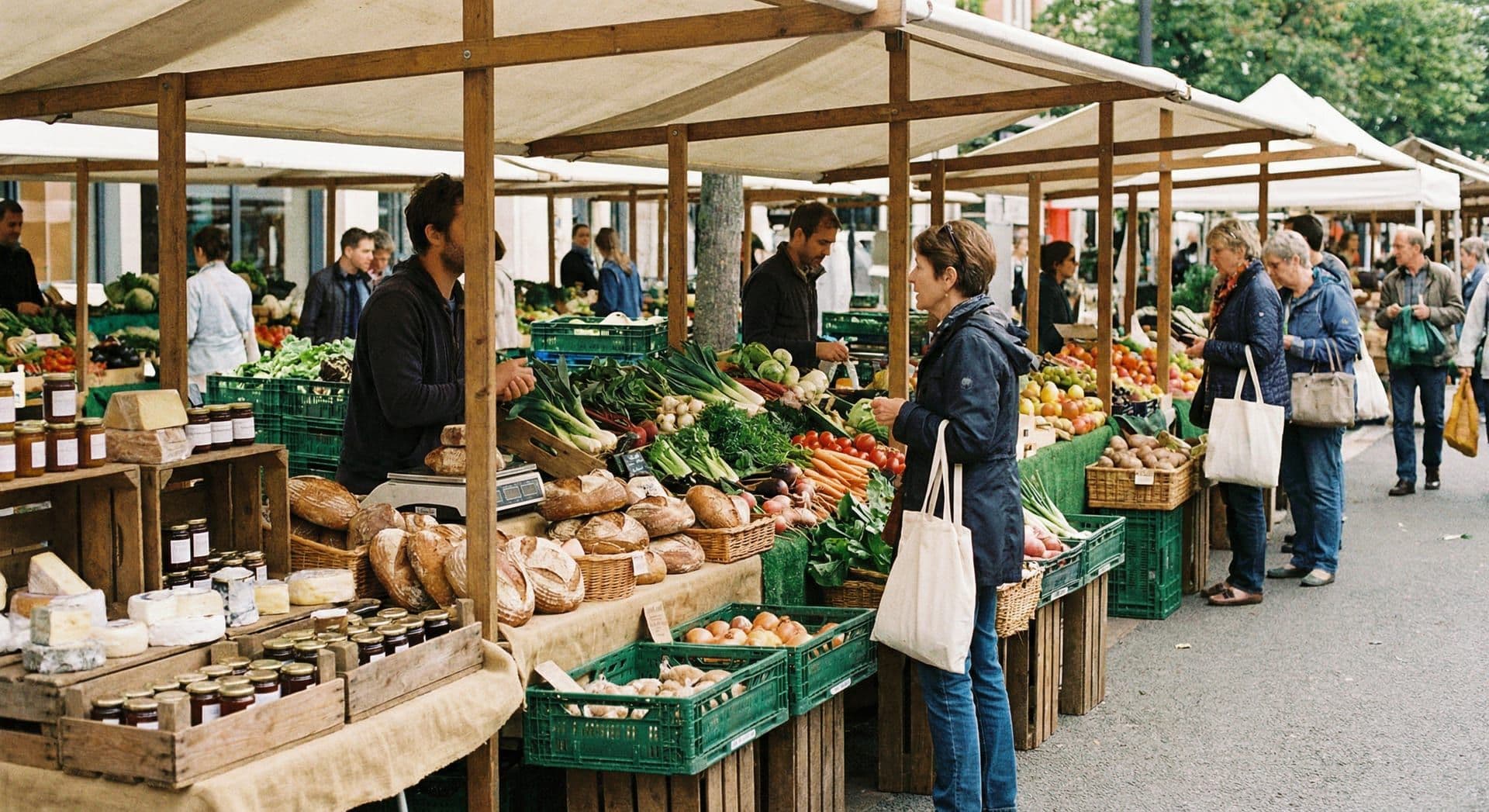
There's something about a food market that a supermarket will never replicate. The conversations with producers, the samples, the discovery of something you didn't know you wanted. Southport's regular food markets: whether on the Promenade, in the town centre, or popping up in Victoria Park: are a genuine draw for locals and visitors alike.
But if you're a market vendor or artisan food producer, you face a unique SEO challenge: you don't have a fixed address. Your "shop" moves from market to market. Your opening hours change weekly. And your Google Business Profile doesn't quite fit the traditional mould.
This guide will show you how to build an online presence that works for market-based businesses: because the people searching "food market Southport" or "artisan bread near me" are exactly the customers you want to reach.
The Market Vendor SEO Challenge
Traditional local SEO advice assumes you have a shopfront: a fixed address, consistent opening hours, and a Google Business Profile tied to a physical location. Market vendors break all of those assumptions.
Market Vendor vs. Traditional Retail
- Fixed address
- Consistent hours
- One GBP listing
- Steady foot traffic
- Multiple locations
- Changing schedule
- GBP flexibility needed
- Event-driven traffic
The good news? These challenges are solvable. And most of your competitors aren't solving them, which means the bar is low.
Google Business Profile for Market Vendors
Yes, you can have a Google Business Profile even without a traditional shopfront. Google offers a "Service Area Business" option that's designed for businesses that go to their customers rather than the other way around.
Setting Up Your GBP
- Business type: Choose "Service Area Business" and list the areas you serve (Southport, Sefton, etc.).
- Category: Be specific: "Artisan Bakery," "Cheese Shop," "Organic Food Store," or "Farmers' Market" rather than just "Food."
- Description: Mention every market you attend regularly. "Find us at Southport Food Market every Saturday and Ormskirk Market every Thursday."
- Posts: Use GBP posts weekly to announce where you'll be this weekend. This keeps your profile active and signals relevance to Google.
- Photos: Upload fresh photos from each market. Your stall setup, your products, the crowd: authenticity matters more than polish.
Your Website: The Hub That Ties Everything Together
As a market vendor, your website is even more important than it is for a fixed shop: because it's the one constant in a changing landscape of locations and schedules.
Essential Pages for Market Vendors
- "Where to Find Us" page: A regularly updated schedule of which markets you'll attend, with dates, times, and locations. This page will rank for "food market Southport this weekend."
- Product pages: Show what you sell with photos and descriptions. "Sourdough bread," "locally smoked salmon," "handmade fudge": each product is a keyword opportunity.
- "Our Story" page: Where your ingredients come from, how you started, why you love markets. This builds trust and gives Google content to rank.
- Online ordering page: If you offer delivery or click-and-collect, this captures searches like "order artisan bread Southport."
The Power of Location-Based Content
Here's a content strategy that works brilliantly for market vendors: write about the places you trade.
Every market you attend is a content opportunity. A blog post like "Why We Love Trading at Southport Market" or "Our Favourite Markets in the North West" does several things at once:
- It ranks for location-specific searches like "Southport food market"
- It shows Google you're genuinely connected to these locations
- It gives you content to share on social media each week
- It builds relationships with market organisers who might share your post
Google Maps for Markets
Google Maps is where many people discover markets. Here's how to make the most of it:
- Encourage customers to leave reviews on Google: Mention that they can find you on Google Maps. More reviews = higher visibility.
- Add your products to your GBP: Google's "Products" tab lets you showcase individual items with photos and prices.
- Use Google Posts for market announcements: "This Saturday at Southport Market: fresh sourdough, new season preserves, and our famous brownies." These show up in Maps and Search.
Building a Customer Email List
Markets are inherently transient: customers visit once and might not come back for weeks. An email list is your bridge between market days.
- Signage at your stall: "Join our mailing list for market updates and exclusive offers" with a QR code linking to your website's signup page.
- Weekly emails: "This week, find us at [Location]. We're bringing [products]." Simple, useful, and it drives website traffic.
- Seasonal offers: Christmas hampers, Easter boxes, summer picnic packs: these work brilliantly for email campaigns and give you content to publish on your website.
Social Media: Your Other Shop Window
For market vendors, Instagram and Facebook often serve as a primary discovery channel. But remember: social media posts are temporary. Your website is permanent.
The ideal flow is:
- Instagram/Facebook: Daily content showing your products, your stall, and the market atmosphere. Tag the location every time.
- Link to website: Every post should ultimately drive people to your website: whether it's your "Where to Find Us" page, your online shop, or a blog post.
- Cross-post to GBP: Repurpose your best social content as Google Business Profile posts for extra search visibility.
Want More Customers at Your Stall?
Get a free audit showing how visible your food business is online: and how to reach the people searching for exactly what you sell.
Southport-based. We've been to every market in town.
More Southport food guides: Food Festival SEO, Restaurant SEO, Boutique Retail SEO.

Written by Damian Roche
Founder & CEO, Churchtown Media
20+ years building websites, 15+ years obsessing over SEO. Based in Southport, helping North West businesses turn traffic into revenue with Next.js and data-driven strategies.
More about DamianNeed Help With This Strategy?
We implement these exact strategies for North West businesses. Get a free audit and see where you stand.
Get Your Free AuditRelated Reading

Need help implementing this?
We help Southport businesses turn these strategies into revenue.
Book Strategy Call