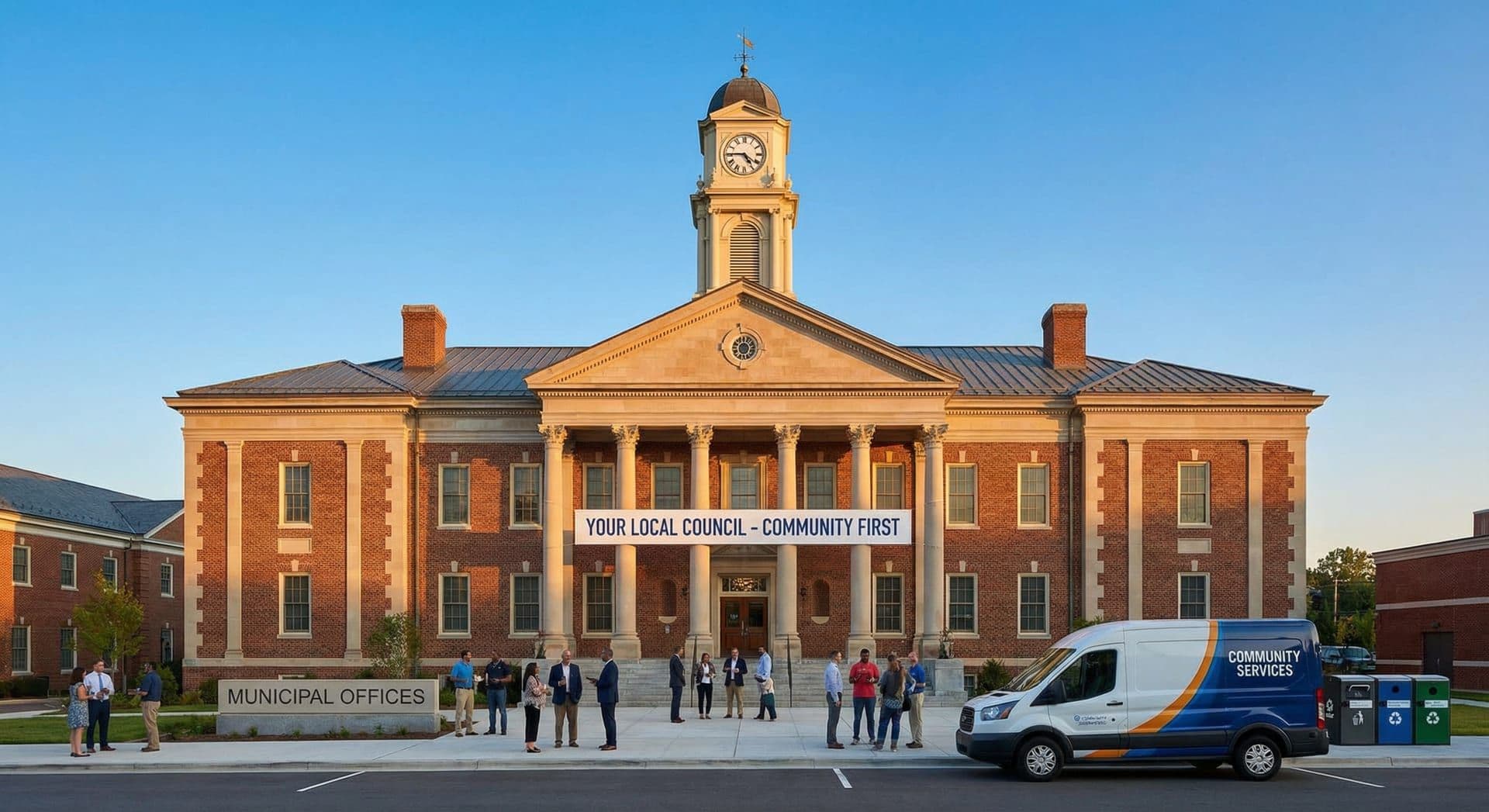
Local Council Websites Should Be Fast, Accessible, and Easy to Use. Is Yours?
Next.js websites for councils and public sector. WCAG accessibility. Service directories. Resident portals. Built for everyone.
Why Local Councils & Public Sector Need a Stronger Digital Presence
Local councils in Merseyside and West Lancashire serve communities with distinct identities and varying digital maturity. Sefton Council: the metropolitan borough covering Southport, Formby, Crosby, Bootle, and Maghull: serves 275,000 residents across a geographically and economically diverse area. Parish and town councils in the wider area, from Churchtown to Scarisbrick to Aughton, serve smaller communities with simpler but equally important digital needs.
The core challenge for council websites is accessibility and findability. Residents searching for planning applications, bin collection schedules, planning permission guidance, local park maintenance reports, or councillor contact details need to find that information within two or three clicks. Council websites that bury information in dense navigation menus or PDF documents consistently generate unnecessary call centre contact: which costs money and frustrates residents.
WCAG 2.1 AA accessibility compliance is a legal requirement under the Public Sector Bodies Accessibility Regulations 2018, but many council and parish websites: particularly smaller ones: are still non-compliant. GOV.UK-style design principles, plain English content, and mobile-first structure are the baseline for public sector digital. MLEC represents a specific digital challenge for Sefton Council's communications: keeping residents, businesses, and visitors informed about the development, its events programme, and its impact on local infrastructure.
We build council and public sector websites to government digital standards: accessible, fast, honest, and genuinely useful for the residents they serve.
The Digital Challenges You're Facing
Outdated CMS Platforms
Many councils run on legacy CMS systems from 2010. Slow, hard to update, failing accessibility standards.
Accessibility Failures
Legal requirement under Equality Act. Non-compliant sites face legal action and exclude residents with disabilities.
Information Buried
Residents need bin collection days, planning applications, council tax info quickly. If it's 5 clicks deep, they'll phone instead.
Not Mobile-Friendly
70% of residents check council sites on phones. Non-responsive designs exclude and frustrate.
What We Build for Local Councils & Public Sector
Every feature engineered for your industry's specific needs. No generic templates-just purpose-built solutions.
The Market Opportunity
Local Councils & Public Sector businesses in the North West face a unique digital landscape. Here's what the data shows.
5 Mistakes Local Councils & Public Sector Make Online
We've audited hundreds of local councils & public sector websites. These are the costly mistakes we see repeatedly.
Legacy CMS platforms from 2010 (74% fail WCAG)
Accessibility failures (legal requirement under Equality Act)
Information buried deep (generates 40% more phone calls)
Not mobile-friendly (70% of traffic is mobile)
No resident portals (modern councils need digital services)
Our Local Councils & Public Sector Website Process
From discovery to launch in 4-6 weeks. Here's exactly what happens and when.
Discovery & Accessibility Audit
We audit your current site for WCAG compliance, research resident needs, and plan your service directory.
- ✓WCAG accessibility audit
- ✓Resident needs research
- ✓Service directory strategy
- ✓Public sector procurement documentation
Design & Accessibility First
We design a WCAG-compliant council website with clear information architecture and resident-first UX.
- ✓WCAG-compliant design mockups
- ✓Service directory layouts
- ✓Accessibility toolbar design
- ✓Resident portal interface
Development & Portal Build
We build a fast, accessible Next.js site with resident portal and service directory.
- ✓WCAG 2.1 AA compliant build
- ✓Service directory
- ✓Resident portal
- ✓Planning application search
Launch & Accessibility Testing
We conduct comprehensive accessibility testing and train staff on content management.
- ✓Screen reader testing
- ✓Keyboard navigation testing
- ✓Staff training
- ✓Accessibility statement
Real Results from Local Councils & Public Sector
Public Sector Digital Benchmark Data
"Poor council website UX generates 40% more avoidable phone calls, and 74% of council sites currently fail WCAG 2.1 AA accessibility standards, according to 2025 local government research."
Investment & Pricing
Council websites range from £8,000-£45,000 depending on scale. Small parish councils with basic service directories start at £8,000. Borough councils with resident portals and planning systems run £25,000-£35,000. Large county councils with complex integrations start at £45,000. Public sector funding and framework agreements available. All packages include WCAG 2.1 AA compliance, staff training, and multi-year support contracts.
Frequently Asked Questions
How much do council websites cost?
Depends on scale. Small parish council: £5k-£8k. Borough council with portals: £20k-£40k. We quote based on requirements and available budget.
Do you understand public sector procurement?
Yes. We can work within framework agreements, handle tender processes, and provide transparent fixed-price quotes.
How do we ensure accessibility?
WCAG 2.1 AA compliance from design through launch. We test with screen readers, keyboard navigation, and contrast checkers.
Can residents report issues online?
Yes. We build 'Report It' systems (potholes, fly-tipping, etc.) that integrate with your back-office systems or email alerts.
Related Industries
Ready to Dominate Local Councils & Public Sector Search?
Get a free Core Web Vitals audit and see exactly where you're losing rankings, traffic, and revenue.