Client came to me in early 2025 with a problem I hear constantly: "Our WordPress blog is killing us."
They ran a profitable industrial e-commerce site. £13k+/month revenue. Hundreds of products. Custom Klaviyo flows. Everything worked. Except the blog.
They wanted to scale content from 10 posts/month to 100+. WordPress couldn't handle it. Page builders (Elementor, Divi) crashed. Load times hit 6 seconds. Google stopped indexing posts.
"Can you migrate us to Next.js?" they asked.
I said no.
Why I Refused to Migrate Their WooCommerce Store
Migrating a profitable e-commerce store is expensive, risky, and usually unnecessary. Here's what they had:
- 400+ products with custom fields, variations, and pricing tiers
- Abandoned cart flows driving £3.5k/month in recovered revenue
- Product pages ranking page 1 for commercial keywords
- Customer accounts, order history, payment gateways all working
Migration cost estimate: £40k+ and 3-4 months. Plus the risk of breaking SEO, losing payment processor integrations, and retraining staff.
Not worth it.
The Solution: Headless Blog, Keep the Store
I proposed a hybrid architecture:
- ✅ Next.js static blog deployed to Vercel at
/blog/* - ✅ WordPress/WooCommerce stays at root domain for products, checkout, accounts
- ✅ Nginx routing at hosting level:
/blog/*→ Vercel, everything else → WordPress
Why This Works
Next.js for the blog:
- Static generation = 1.2s load times (vs 6s on WordPress)
- Can publish 100+ posts/day without performance degradation
- Programmatic SEO: FAQ schema, breadcrumbs, meta tags generated at build
- Zero plugins, zero security vulnerabilities, zero maintenance
WooCommerce for the store:
- Store already profitable: don't fix what isn't broken
- Migration risk avoided entirely
- Klaviyo flows keep running
- Product rankings protected
The Numbers: 12 Months Post-Launch
Timeline: Launched March 2025. These numbers are from March 2025 → Feb 2026 (12 months of data).
Google Search Console (Verified Data)
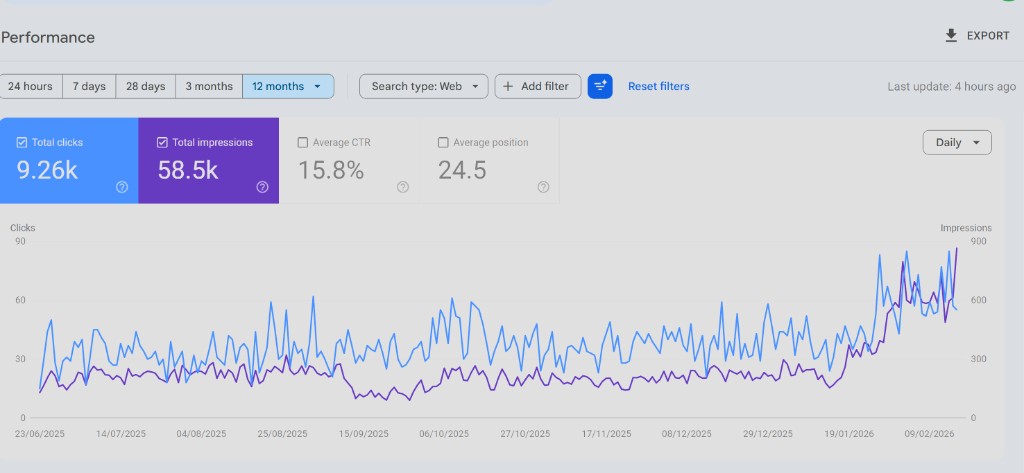
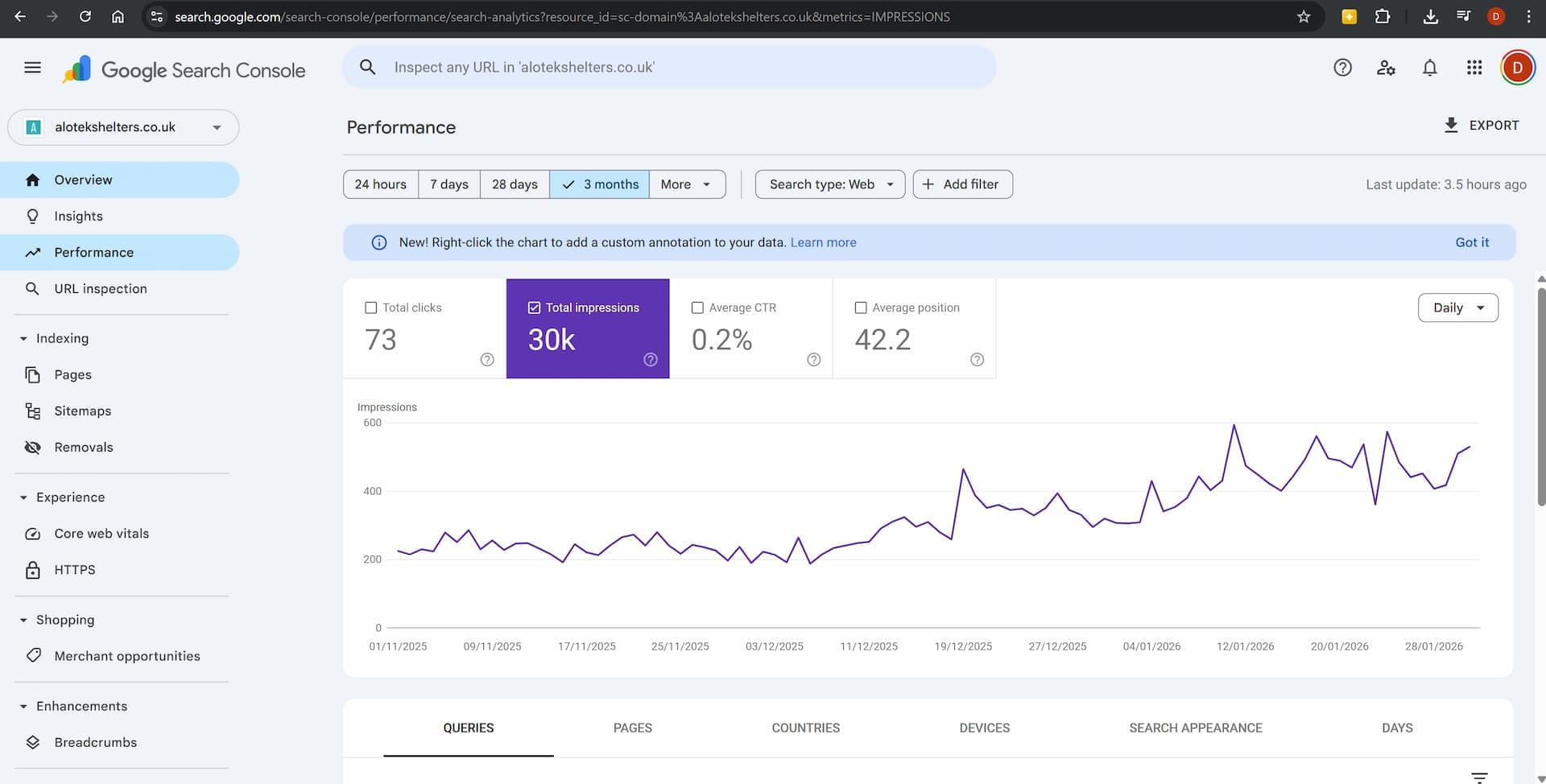
Google Search Console: 12-month performance showing exponential traffic growth
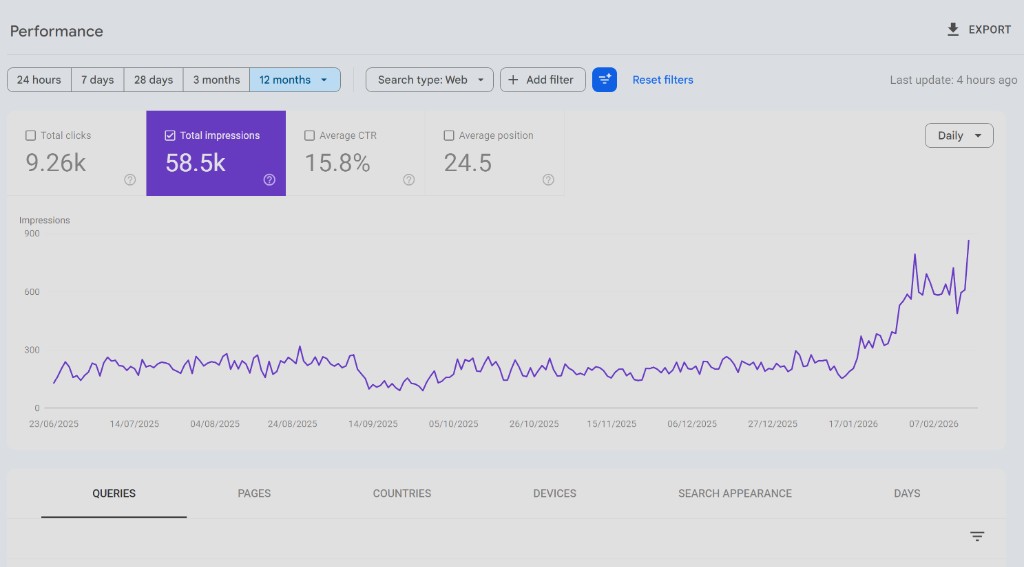
Impressions hockey stick: flat for months, then exponential growth starting Jan 2026
Keyword Velocity: The Hockey Stick
Growth was steady for 10 months. Then in Jan-Feb 2026, something clicked. Keyword rankings exploded:
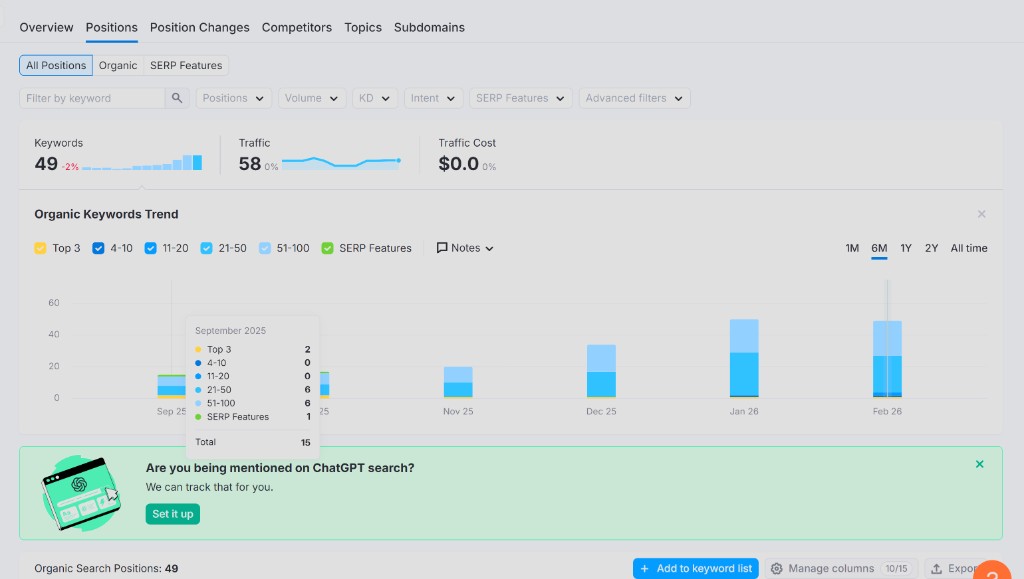
Keyword explosion: Jan-Feb 2026 saw 30 keywords → 253 keywords (8.4x growth in 4 weeks)
- 253 keywords ranking (up from ~30 in late Jan = 8.4x growth)
- 14 keywords in top 3 (page 1, positions 1-3)
- 15 keywords positions 4-10 (still page 1)
- 18 keywords positions 11-20 (page 2)
- 47 keywords on page 1-2 = high-visibility traffic drivers
Average position: 24.5 (page 3). That's not great: yet. But the trajectory matters more than the snapshot. This is early-stage growth with clear acceleration.
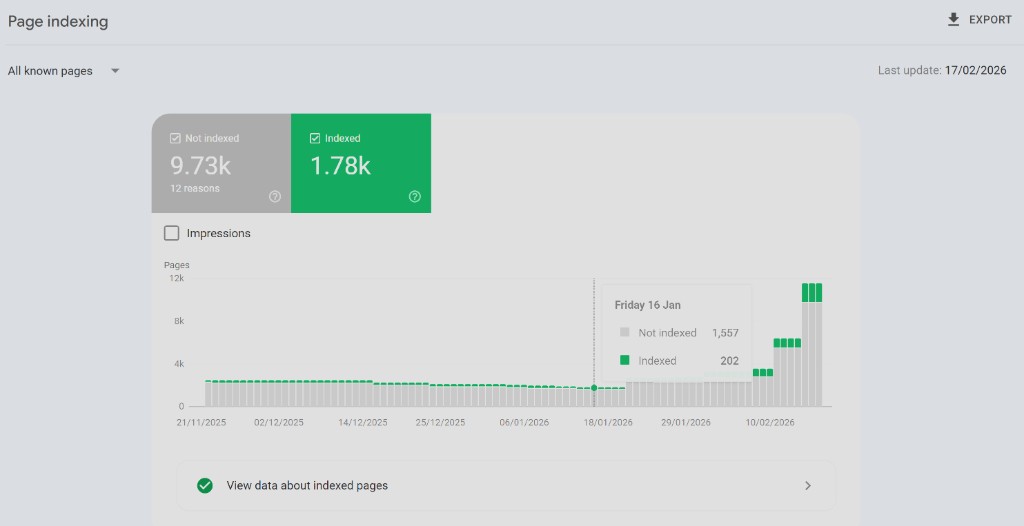
Indexing success: 1.78k pages indexed (vs 200 on WordPress). Green bars = Google loves static Next.js pages.
Technical SEO: Zero Errors
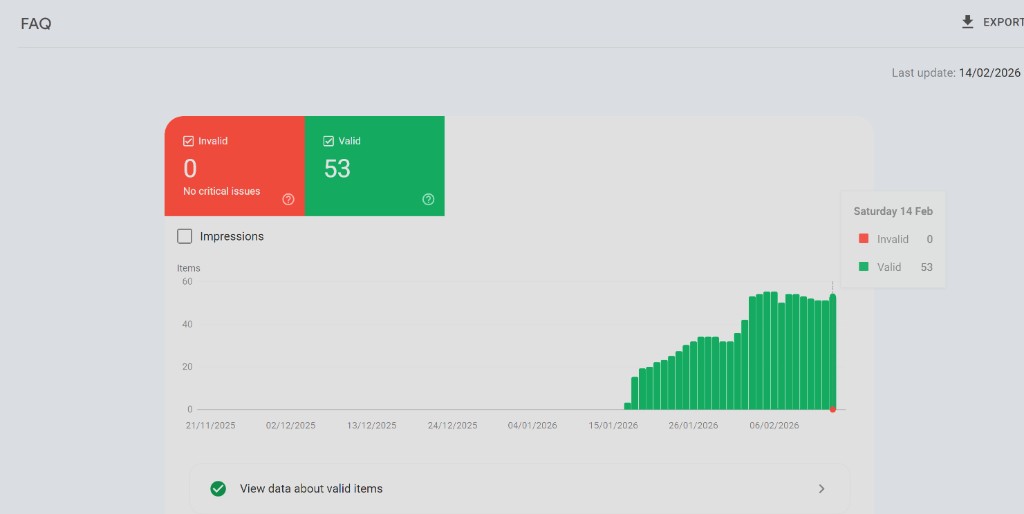
Programmatic SEO at scale: 53 FAQ schemas, 0 errors. Impossible to maintain manually on WordPress.
What Worked
- Hybrid architecture let us move fast without risking revenue. Store stayed profitable while blog scaled.
- Programmatic SEO at scale. 53 FAQ schemas implemented in minutes, not days. Every post gets breadcrumbs, Article schema, and optimized meta tags automatically.
- Static generation = Google loves it. Posts indexed within 24-48 hours. WordPress took weeks or never indexed at all.
- Content velocity went from 10/month to 100+. Zero performance degradation. No crashes. No plugin conflicts.
What I'd Do Differently
This isn't a perfect case study. Here's what needs work:
- Average position 24.5 is misleading. They're tracking 253 keywords: many aren't relevant targets. The 47 keywords on page 1-2 are what actually matter. Need to clean up keyword tracking and focus on high-intent terms.
- 9.73k pages not indexed. Need to audit for thin content, duplicates, and indexing issues.
- Internal linking between blog and product pages could be stronger. Should've built more contextual links from blog posts to products to drive conversions.
The Takeaway for Your Business
You don't have to migrate your entire site to scale content. If your e-commerce store works, keep it. If your blog doesn't: split them.
This hybrid approach works for:
- E-commerce stores (Shopify, WooCommerce, Magento) that need better content velocity
- B2B sites with lead gen forms but slow, bloated WordPress blogs
- SaaS companies with working product pages but terrible content performance
The numbers don't lie: 1.78k pages indexed, 253 keywords ranking, 9.26k monthly clicks. All while protecting a £13k+/month revenue stream.
If your blog is holding you back, this is how you fix it.

Written by Damian Roche
Founder & CEO, Churchtown Media
20+ years building websites, 15+ years obsessing over SEO. Based in Southport, helping North West businesses turn traffic into revenue with Next.js and data-driven strategies.
More about DamianNeed Help With This Strategy?
We implement these exact strategies for North West businesses. Get a free audit and see where you stand.
Get Your Free AuditRelated Reading


Need help implementing this?
We help Southport businesses turn these strategies into revenue.
Book Strategy Call